Pages

Showing posts with label Phonological awareness. Show all posts

Tuesday, 6 July 2021

CVC Centers


Here is a cute little center that you can use in class or at home to keep your child's skill level up or as a boost for school.

Here are 3 centers- 6 pages each. This is a quick, low prep product! I have included ideas on how to use the centers but if you have another idea, great! Change it up J

1. For the first center, you need magnetic or foam letters to build the CVC words. Alternatively, you can use it to identify the beginning, middle and ending sounds.

2. The second center is for writing the word and colouring the pictures.

3. The last center- you can cut apart the pictures and have the student match them, or you can fold the word and have them unfold it once they’ve read it. You can have them do this one with a partner.

Any questions email mindy@creatingcommunicators.net


Saturday, 11 July 2020

How Many Sounds?


Segmenting


Segmenting sounds is so important! It is a skill that many children don't have and it is an absolute must for increasing reading skills.


What is segmenting:

Phoneme segmentation is the ability to break words down into individual sounds.
For example, the learner breaks the word dog into its sounds – d, o, and g.


Here is a quick, cute activity to help your child/students with that skill.


Monday, 18 May 2020

Compound Words

Compound Words – two words join to form a new word that has its own meaning


• To develop the concept of word parts, help your child hear the parts (chunks, syllables) in compound words by clapping the two words while saying them (e.g., fireplace – fire place).
 

• Any objects (small toys, blocks, pieces of food) can be used to represent the word parts as your child says the parts.
 

• You say the parts with about a 1-second pause between the word parts and ask your child to guess the compound word (snow flake = snowflake).
 

• Play the “Say It, Say It Again Game” with your child (e.g., “Say raindrop.” (Pause for response.) “Say it again, but don’t say drop.”*
 

• If your child has difficulty with the previous activity, play the “Dog in the Doghouse” game. Use two coins, beans, or other small objects and a cup. Turn the cup upside down and pretend it’s the doghouse. Say a compound word, placing a small object in front of you as you say each smaller word, left to right. (Sit next to your child so “left” and “right” are the same for both of you.) Then, cover one object with the cup and ask, “What is in the doghouse?” For example, as you say the word rainbow, place a bean in front of you for rain and another bean for bow. Cover the bean to the left with the cup. Ask, “What is in the doghouse? Your child should say, “rain.”*
 
*Robertson, C., Salter, W. (1998) Take Home Phonological Awareness. LinguiSystems, Inc., pp. 39, 41 (out of print)


Friday, 15 May 2020

Syllables

A syllable is a word part that contains a vowel sound.

• Syllable-level activities are slightly more difficult than compound words activities. These oral activities are the building blocks for study in sounds and letters. These activities will help your child to manipulate syllables in words and develop an understanding of word structure.


• Have your child place the objects for the syllables in each word. Be sure your child places them left to right. Start with two-syllable words and gradually increase to 3 or 4 syllable words.
• Using coins, beans, or small objects, say each word one syllable at a time as you place an object in front of you for each syllable. Then point to one object and ask, “What’s this syllable?” Point to another object and ask the same question.


• Count on fingers the number of syllables in the names of people in your family and friends. Count the syllables in a particular category like clothing, transportation, furniture, toys, foods, insects, or sports.


• When driving, say words in syllables and have your child blend them together to say a word. Or have your child say a word in syllables and you say the complete word.

Robertson, C., Salter, W. (1998) Take Home Phonological Awareness. LinguiSystems, Inc., pp.62, 64. (out of print)


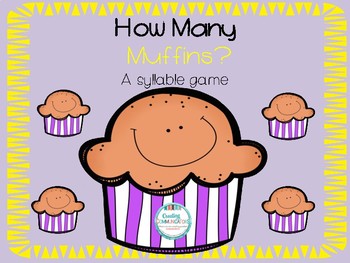
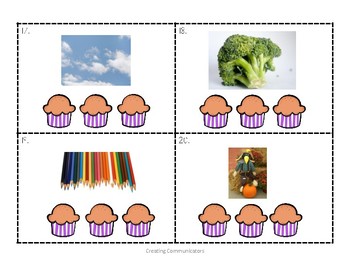
Here is a syllable game from my TPT store


How Many Muffins? Syllable game

How Many Muffins? Syllable game

Monday, 11 May 2020

Segmenting Sentences

Segmenting sentences into separate spoken words

• Starting with a two-word (spoken)  sentence (e.g., She jumps.), explain that this sentence has two parts (i.e., two words).


• Count the words in oral sentences- starting with short sentences  (2/3 words) to longer sentences  (5 words). Try not to use very long sentences for young students. Use objects (like blocks, bingo chips, cheerios) to represent each word. 


• Use only one-syllable words at first and then progress to multi-syllable words.
• Explain that each word has a meaning, even the function words like ‘a’, ‘the’, ‘in’, ‘of’, ‘on’, ‘for’, etc.
• Clap once for each word as you and your child sing a favourite song or recite a nursery rhyme. If your child claps more than once for a word or fails to clap for a word, repeat the line together so that he/she can follow your lead.


Robertson, C., Salter, W. (1998) Take Home Phonological Awareness. LinguiSystems, Inc., p. 32 (out of print)


 Here is an app you might want to try!