Some of the students in your class may have a hard time with Pencil Grasp! Here is a quick video to help you!
Showing posts with label OT and speech. Show all posts
Showing posts with label OT and speech. Show all posts
Thursday, 3 December 2020

Friday, 16 October 2020
Ideas to Build Core Strength
First of all: Why does Core strength matter?
Ideas to improve it:
How can you work on core strength with your child in speech or in the classroom?
*lay down on the floor
*color or play on the floor
*use an exercise ball
Monday, 5 October 2020
OT and Speech
There have been so many funding cuts in Canada that when I work with children I like to try and see the big picture. Speech is my area but I like to try and target as many areas as I can, so they get the most bang for their buck. Not all speech kids have OT concerns, but some definitely do.
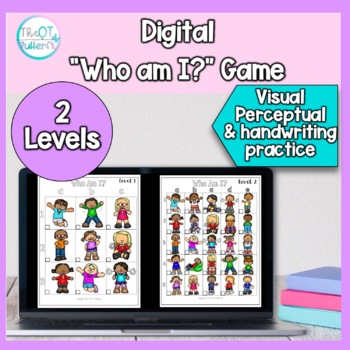
I found this resource that target vocabulary skills, asking "wh" and yes/no questions, verbs and much more! It is from the OT Butterfly and I think it is a great resource for face to face or distance learning.
In her words:
"Are you doing Telehealth or distance learning with your OT clients and
looking for a virtual, digital interactive game to play with them? This
digital "who am I?" game board allows you to pull up the PDF on your
screen and screen share it with your client. The game is played similar
to "Guess who" but instead of putting down cards to rule out answers,
you can click boxes to illustrate this.
Click on the picture to listen to her preview video.
Thanks, The OT Butterfly!
Monday, 4 November 2019
Executive Functioning Skills
I had some kids that were struggling and some co-workers! I was having a hard time pinpointing why some staff weren't being successful. I would schedule everything, plan all activities, basically make their day fool-proof and they still weren't getting things done. They would go off on tangents and start other activities and not finish them. They wouldn't be able to get the caseload all finished (all the required kids treated in a day), and their stuff was all over the place, lost and totally disorganized. Needless to say, it was driving me, batty! I just couldn't' get why they couldn't keep it all together. Now I'll back up a bit... I have about a 4 hour or 400km commute each day, I have 3 kids, get all of my work activities planned and prepped for all of my caseloads (some at different locations, I have 3 SLP's, 3 OT's and 2 aides that work with me. I coordinate it all... without any secretary ( I think I need one!!) So being Type A (in specific ways) I couldn't get how you couldn't carry out a plan, with prepped materials, and go see kids on the caseload... Penny, an OT that works for Creating Communicators mentioned that she was the difficulties happening and said that maybe that person has Executive Functioning difficulties. I asked, ok, what's that?
She explained and I had an AHA moment! That is precisely what is happening here! I went out and found some info....
What are Executive Functioning Skills!
Executive function and self-regulation skills depend on three types of brain function: working memory, mental flexibility, and self-control. These functions are highly interrelated, and the successful application of executive function skills requires them to operate in coordination with each other.
There are 8 Exec Functions:
After I learned what the 8 areas were, it was glaringly evident that this is what the problem was. There was no self-monitoring- if I mentioned anything, she would be defensive and blame others and had no self-perception of her abilities or her actions. And then the flexible thinking... if I said that we had to do something she wouldn't be able to monitor the times it was ok, not ok and totally not important. It was very discouraging.
I found some resources that are intended for my caseload, but I thought it can't hurt to have some more information.
Pathway to Success has some really helpful resources.
Click here for her store and on the pics for a link to the resources.
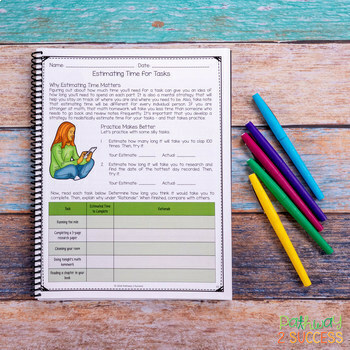
This freebie:
In her words:
Executive functioning skills are the basis for planning, organizing, initiating, and following through will all tasks, assignments, and problems inside and outside of school. Many students who forget assignments, are disorganized, can’t complete long-term assignments, have trouble focusing, and experience difficulty with change often have weak executive functioning skills. These are the students who need to be taught explicit skills in order to become successful in school and in life after school. Simply put, executive functioning skills are necessary life skills.
She explained and I had an AHA moment! That is precisely what is happening here! I went out and found some info....
What are Executive Functioning Skills!
Executive function and self-regulation skills depend on three types of brain function: working memory, mental flexibility, and self-control. These functions are highly interrelated, and the successful application of executive function skills requires them to operate in coordination with each other.
There are 8 Exec Functions:
- Impulse control,
- Emotional Control
- Flexible Thinking
- Working Memory
- Self-Monitoring
- Planning
- Prioritizing
- Task Initiation
- Organization
After I learned what the 8 areas were, it was glaringly evident that this is what the problem was. There was no self-monitoring- if I mentioned anything, she would be defensive and blame others and had no self-perception of her abilities or her actions. And then the flexible thinking... if I said that we had to do something she wouldn't be able to monitor the times it was ok, not ok and totally not important. It was very discouraging.
I found some resources that are intended for my caseload, but I thought it can't hurt to have some more information.
Pathway to Success has some really helpful resources.
Click here for her store and on the pics for a link to the resources.
This freebie:
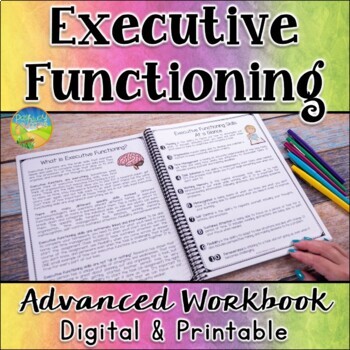
And for a more indepth this Workbook:
Executive functioning skills are the basis for planning, organizing, initiating, and following through will all tasks, assignments, and problems inside and outside of school. Many students who forget assignments, are disorganized, can’t complete long-term assignments, have trouble focusing, and experience difficulty with change often have weak executive functioning skills. These are the students who need to be taught explicit skills in order to become successful in school and in life after school. Simply put, executive functioning skills are necessary life skills.
Monday, 23 September 2019
Fine Motor Kits
Many kids we work with also have multiple areas to work on, especially OT. So I made a Fine Motor kit. It is excellent for preschool. Preschool is a great time to start with fine motor- before they start printing and holding those little pencils. We need them ready to go to kindergarten. :)
Here is a Fine Motor Pack that you can use with very simple tools that you probably already have around your desk.
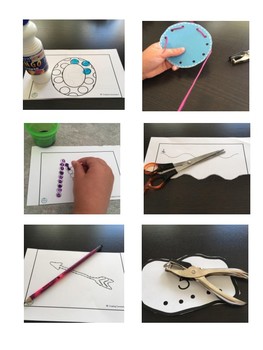
In this pack are nine fine motor centers that you can use for your class or speech therapy. They will work as centers or group activities. The center's target: cutting, colouring, dabbing, lacing, hole punching, play-doh and tracing. These kits target the fine motor skills of students that are suitable for all students to work on and perfect. In addition to fine motor skills, there are also opportunities for learning number and letters, as well.
There are nine packs, and you can put them in small plastic containers to keep them organized. Some of the kits can be printed on card stock and laminated. Then you can use them over and over; others can be printed on standard paper, stapled and given to students as booklets. Very low prep! You can also place extra copies in your class for students to work on as early finishers.
Print all activities on standard paper except activities 3 and eight on card stock and then laminate those. You can also laminate the label and instruction pages.
What you need: bingo dabbers, play-doh, scissors, pencils, handheld hole punches, crayons, cotton swabs (cut in half), liquid paint, a small container for paint, shoelaces and container or large zip-loc bags for your centers.
Lacing kit- cut and laminate and then hole punch where ever you like and have the students use laces to practice.
There is also a pre-test and post-test page so you can track progress!
Sunday, 9 June 2019
Tools for Kids
For all of my Albertan friends, I found a cool business that sells OT products. Now if you work with kids, you know that I like to incorporate OT in my Speech sessions. I have found so many interactive and engaging ways to use Mat Mat in preschool! You can talk about body parts, what they are used for, sounds, and the concepts of the pieces... Opportunities are endless.
Then we have Learning Without Tears- you can introduce the artic sound that the child is working on, then to use it in different ways you can have them make it with play-doh, writing it with the chalkboard, crayons, build it with the wooden pieces and use the stamp and see. I absolutely love that you can use so many multisensory activities that will keep the little guys involved!
Tools for Kids is a cost-effective way to get the LWT materials quickly and easily, especially if you live in Alberta.
In their words- "Occupational Therapy Products at Tools For Kids Inc!
Tools For Kids Inc. carries some of the most popular lines of pediatric O.T. supplies, including Handwriting Without Tears®, Alert Program® and PDP products. We also carry those small items such as pencil grips, oral motor products, adapted scissors and hand fidgets.
As Occupational Therapists, we know that there are times when a child needs special tools to learn a skill or participate in an activity with their peers. Learning and participating in school should be fun and easy! Specialized scissors that spring open and require less muscle control can make the difference between having an adult precut an art project and a student being able to cut it out by themselves. Hand fidgets and wiggle cushions can help many children get to that just right speed to learn and listen. These tools should be easy to access for everyone."
Monday, 11 June 2018
Free OT products
With Creating Communicators, I have started providing more OT services to schools. Recently, I have been working with an OT that has lots of experience, and she has been giving me information that I can pass on to teachers. Now, we all know that OT skills are so crucial for all kids and in every classroom. They need to work on writing skills, scissors, self-regulation, gross motor skills, and so much more. Not only are OT skills important for our general classrooms, but many of these skills are essential for our speech caseload too. Please don't get me wrong, I am not trying to take the place of the OT. We definitely need them! But sometimes educating us can help us to make better referrals to OT and help teachers (and definitely our kids!) Once in a while you have kids, and you go "hmmm!? What is going on here?!" ( I know I do!) Having a little bit of background knowledge in OT can help the kids, help the teachers, and help OT's. When you see kids, you can say- I think they may be having troubles in this area...

While I was looking for some OT products, I found Tiny Tackers Therapy Store on TPT. WOW! What a great store! They have some really great products, and I thought I would share some of my favorite free products that they have!
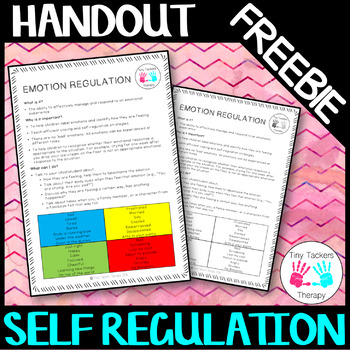
"Parent/student information sheet to assist children to develop emotion regulation skills.
Includes:
- What is emotion regulation?
- Why is it important?
- How can I help? - strategies to help students/children
- List of emotion words grouped into similar feeling groups."
While I was looking for some OT products, I found Tiny Tackers Therapy Store on TPT. WOW! What a great store! They have some really great products, and I thought I would share some of my favorite free products that they have!
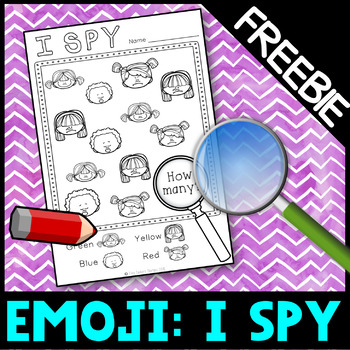
"This activity is designed to assist students learning emotion recognition skills, emotion regulation, feels behavior management, etc.
This product contains:
1 x counting I spy (i.e., how many happy faces can you find?)
1 x coloring I spy (i.e., color all the happy faces red)
Being an 'I Spy' product, students are also working on visual perceptual skills. This refers to the brain's ability to make sense of what the eyes see. Visual perception is needed in the classroom for copying from the board and discriminating between different letters of the alphabet."
This product contains:
1 x counting I spy (i.e., how many happy faces can you find?)
1 x coloring I spy (i.e., color all the happy faces red)
Being an 'I Spy' product, students are also working on visual perceptual skills. This refers to the brain's ability to make sense of what the eyes see. Visual perception is needed in the classroom for copying from the board and discriminating between different letters of the alphabet."
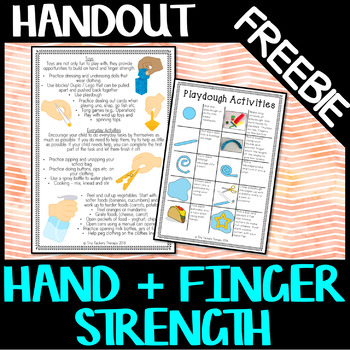
"Handout for parents and teachers on hand and finger strength.
Hand and finger strength is important for lots of everyday activities including doing up buttons and zips, handwriting, using scissors, etc
List lots of different activity ideas and provides examples and pictures on how to assist your child at home and school to develop their hand and finger strength!"
Hand and finger strength is important for lots of everyday activities including doing up buttons and zips, handwriting, using scissors, etc
List lots of different activity ideas and provides examples and pictures on how to assist your child at home and school to develop their hand and finger strength!"
"Parent/student information sheet to assist children to develop emotion regulation skills.
Includes:
- What is emotion regulation?
- Why is it important?
- How can I help? - strategies to help students/children
- List of emotion words grouped into similar feeling groups."
Wednesday, 25 April 2018
OT Ideas in Speech and the Clasroom
Here are some great ideas that teachers can use in the classroom for wiggly kids
or for in your next speech therapy session!~

Interest-Based Learning. Use your student's interests to introduce academic concepts.
If they are engaged in an activity,
they are much more likely to focus and find success.
These activities could be presented at Centre Time.
These are examples below using Lego:
- Creating Letters. First, make the letter with the Lego pieces, trace it with your finger,
- Patterns. Lego is terrific to use for patterns. Introduce A/B patterns with different colors of
· Lego. Build towers with Lego using patterns. Build on this activity by adding in turn-taking to build the towers in a pattern.
- Counting. Work together to build a house but give him the dimensions. Ex: Tell the student the
house must be ten pieces long and seven pieces wide. This is also a great way to target concepts and following directions.
Remaining Seated. Many students have a difficult time remaining seated throughout the day, and many students need more movement in their daily routines. Frequently by purposefully adding movement, we find students are more attentive and ready to learn.
Some ideas for home and school are below:
Dynamic Seating.
Trial an air-filled cushion or wobble stool in the classroom with students.
Theraband. By tying a piece of elastic band to either the front legs of the desk or
between the legs of the chair it allows the students to wiggle and fidget their feet without distracting the class.
Work Positions. We often have students learn while seated at a desk or table.
Vary work positions. Ex: Looking at a book while sitting cross-legged on the floor,
coloring while standing with a paper taped to the wall, counting jumping jacks or
while bouncing a ball rather than working with manipulatives.
Making letters with sticks in the sand rather than pencil and paper. Add hands-on learning whenever possible.
Movement Breaks. If there is an activity that requires sitting for long periods of time offer movement breaks to students. Some ideas have been previously provided.
Heavy Work.
Heavy work activities engage the big muscles in our body and provide
proprioceptive (body in space) and vestibular (movement) feedback for the student.
By purposefully engaging these senses through heavy work we find students become more organized and have better attention following these activities.
Some examples of heavy work activities are below:
Home: help unload groceries from the vehicle outdoor chores - help shovel the walkways, sweep, rake the leaves or carry a bucket to water the flowers. Carry the laundry basket, vacuum, wash floors.
Home/School: Participate in sports and active games.
Ride a bike.
School: help carry a stack of books to the library or restock the photocopier with a
package of paper.
push the lunch cart to the classroom.
outside play – monkey bars, rock walls, push someone on a swing.
Putting away and taking out gym mats and equipment.
Saturday, 9 September 2017
Fine Motor Freebie
If your kids need some extra practice, before they start working on printing, then check out this Fine Motor Freebie!
If you want a bigger pack my full pack is $5 in my shop!
Subscribe to:
Posts (Atom)